Never lose your parking spot—even without network.
Project
Car parking app
Year
2025
Designing a parking experience that works even when networks don’t—helping users navigate multi-story buildings and locate their exact parking space with clarity and ease.
By combining offline maps, indoor navigation, and QR-based interactions, the solution creates a seamless connection between users and parking management—turning a frustrating process into a guided journey.
Scope of Work

01 THE SHORT VERSION
Designing a parking experience that works seamlessly even in low-network, multi-story buildings—helping users book, navigate, and locate their exact parking space without relying on unstable GPS signals.
By combining indoor navigation, offline maps, and QR-based verification, the solution bridges the gap between car owners and parking management—making the entire journey from entry to exit smooth, predictable, and stress-free.
Finding your way, without guessing
By the end of this project, users no longer had to circle around parking floors trying to locate their assigned spot.
Instead, they could:
Navigate directly to the parking entrance
Check in seamlessly using a QR code
Follow guided directions to their exact parking slot
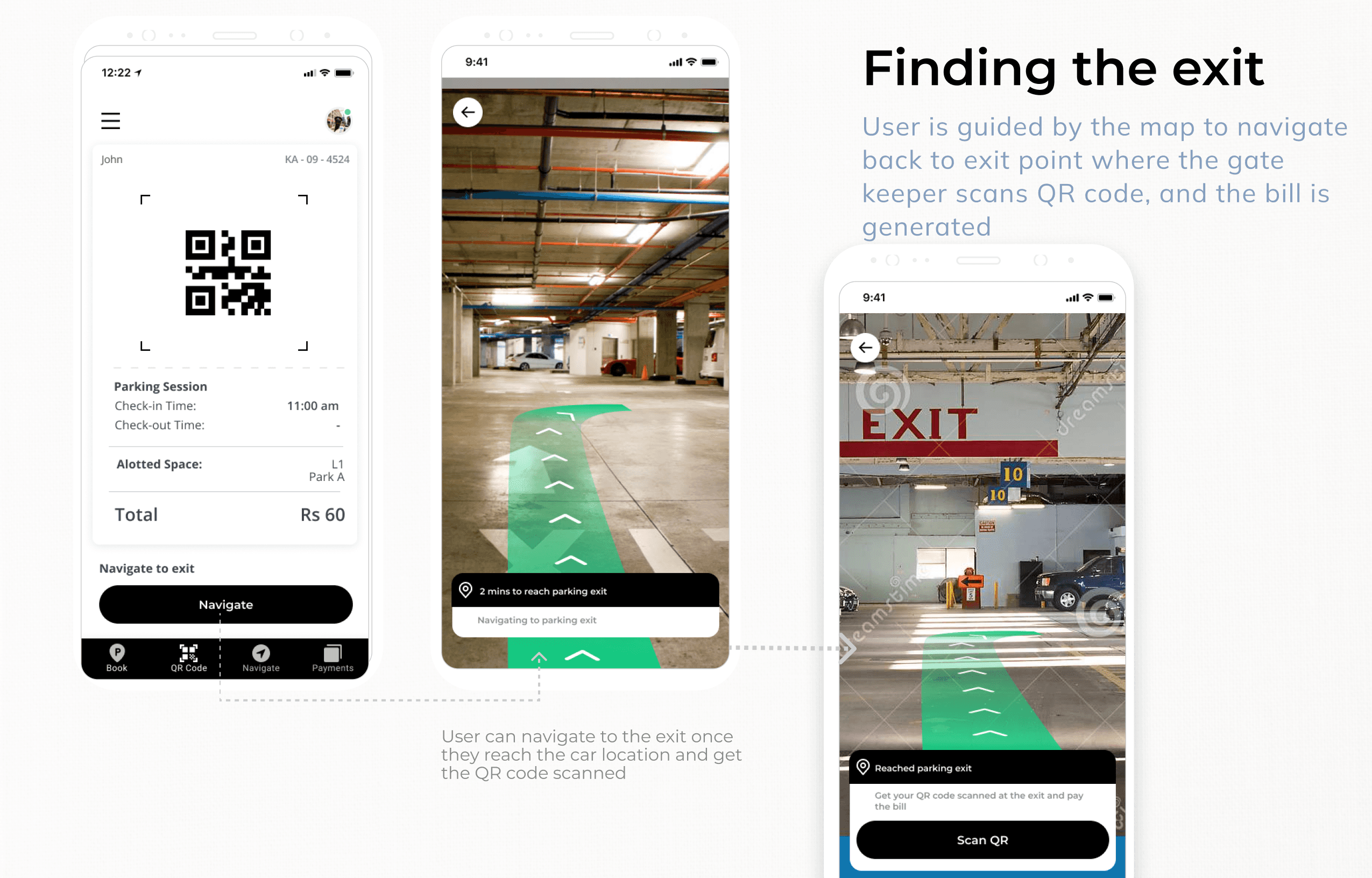
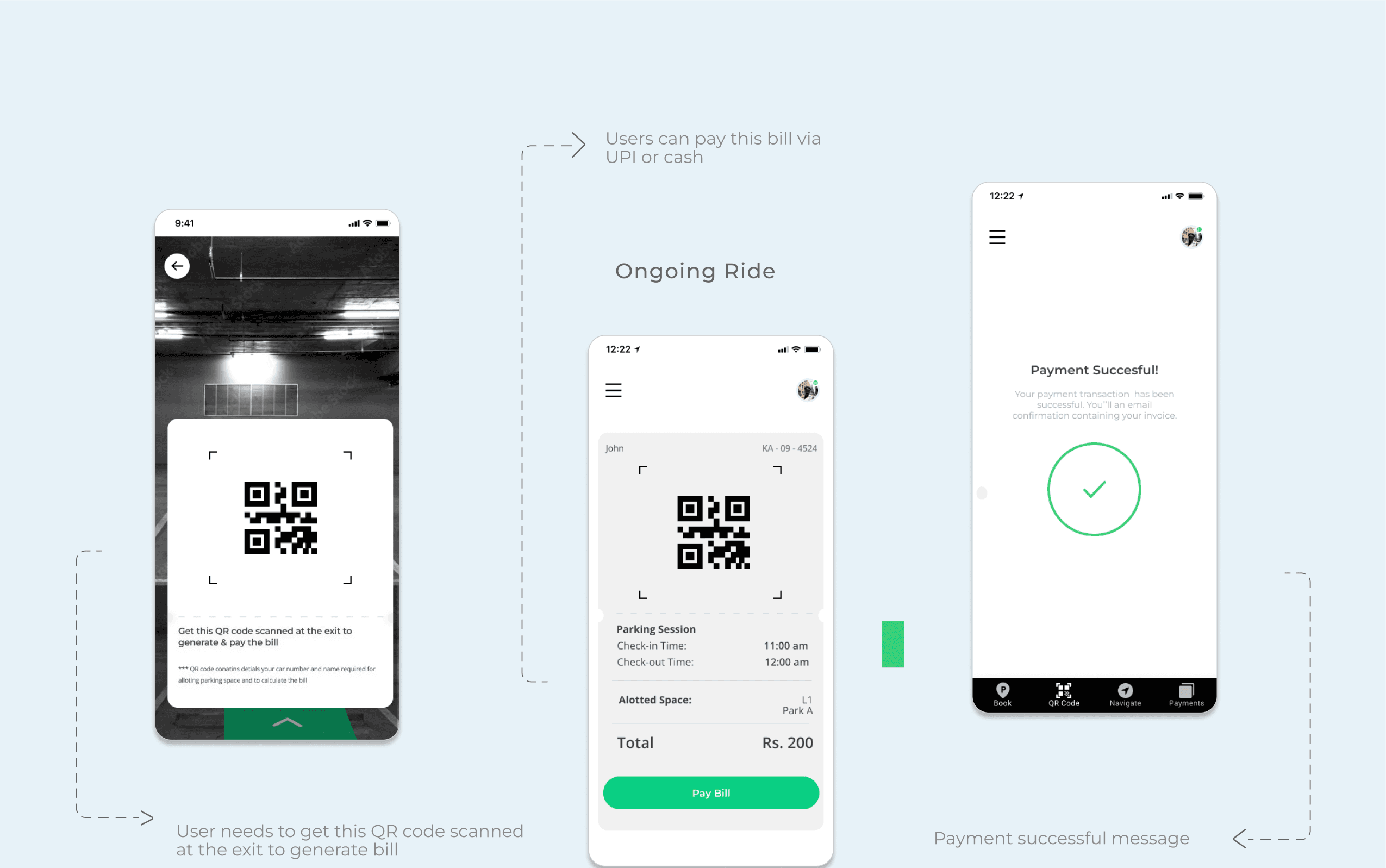
Exit without confusion through a simple scan-and-pay flow
Even in low-network conditions, the experience remained reliable—removing one of the most frustrating parts of urban driving.
What changed
The experience shifted from:
Guesswork → Guided navigation
Poor connectivity → Offline-ready experience
Manual coordination → Structured system for both users and management
For users, it became about clarity and confidence.
For management, it introduced control and visibility.
Why this needed to exist
Parking in multi-story buildings often breaks down at the worst moment—right when users need precision.
From research and assumptions:
GPS signals drop or become inaccurate indoors
Users struggle to locate assigned parking spaces
Time is wasted navigating floors without clarity
Management lacks tools to guide and verify users efficiently
The system had all the components—but no unified experience to connect them.
Designing for unreliable environments
This project wasn’t just about UI—it was about designing for constraints.
The core challenge:
How do you create a reliable navigation experience where network and GPS cannot be trusted?
The solution combined multiple approaches:
Offline map availability (downloaded during onboarding)
Indoor positioning systems (like iBeacon, UWB, or similar technologies)
QR-based checkpoints for verification and flow continuity
This ensured the experience doesn’t break—even when connectivity does.
Building a connected journey
The experience was designed as a continuous flow:
Before entering
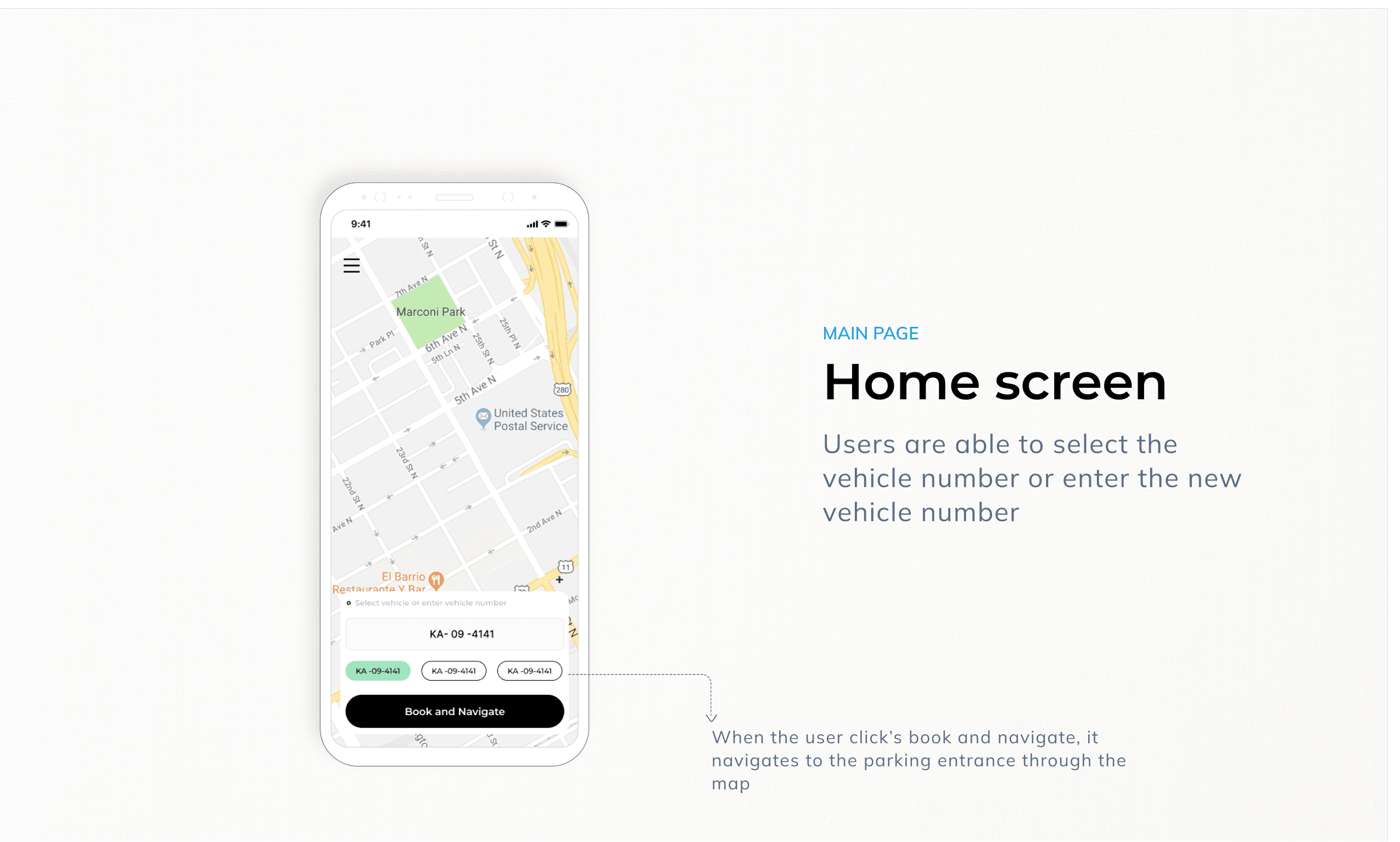
Users select or add their vehicle
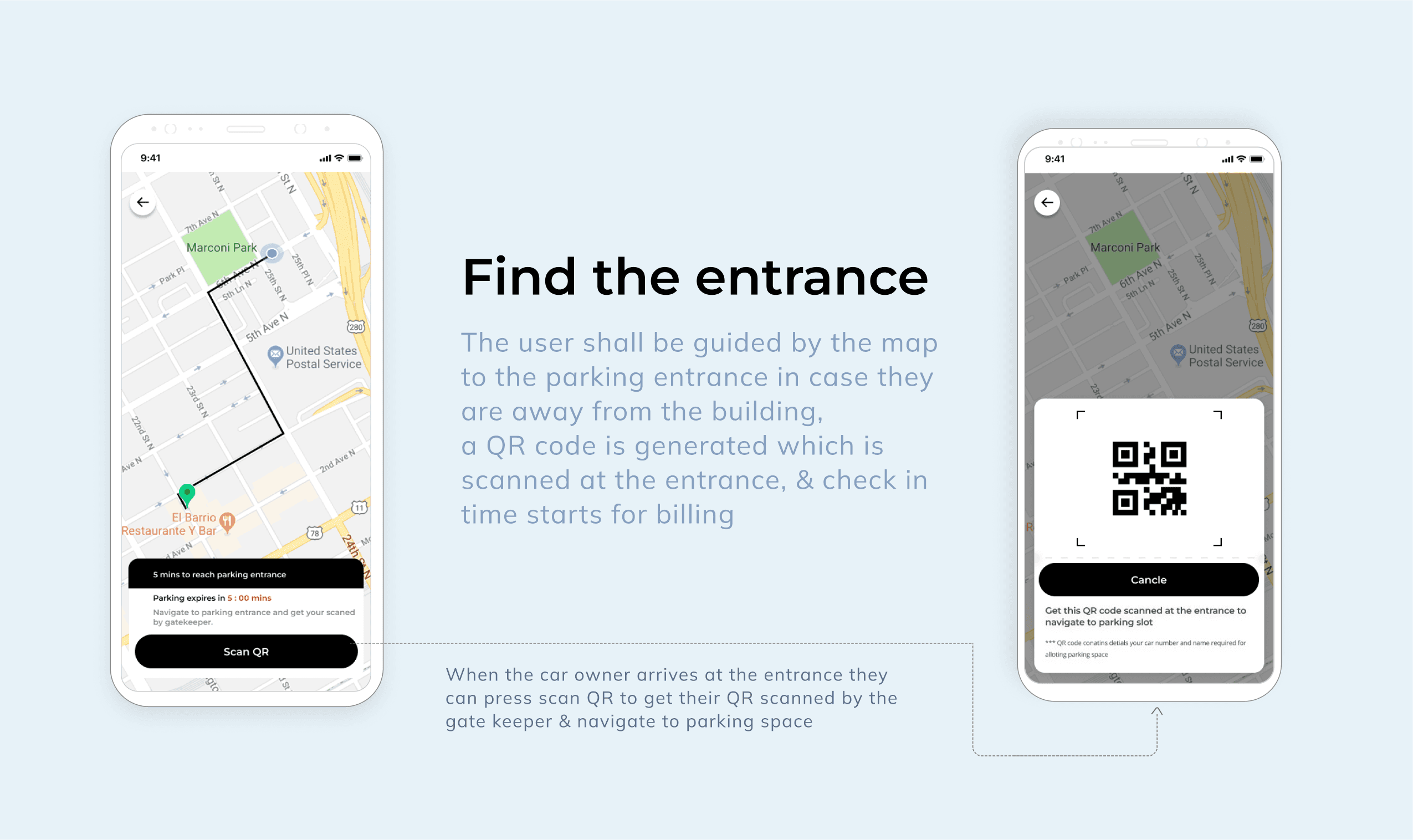
Navigate to the parking entrance via map
At the entrance
A QR code is generated and scanned for verification
Entry is logged and parking session begins
Inside the building
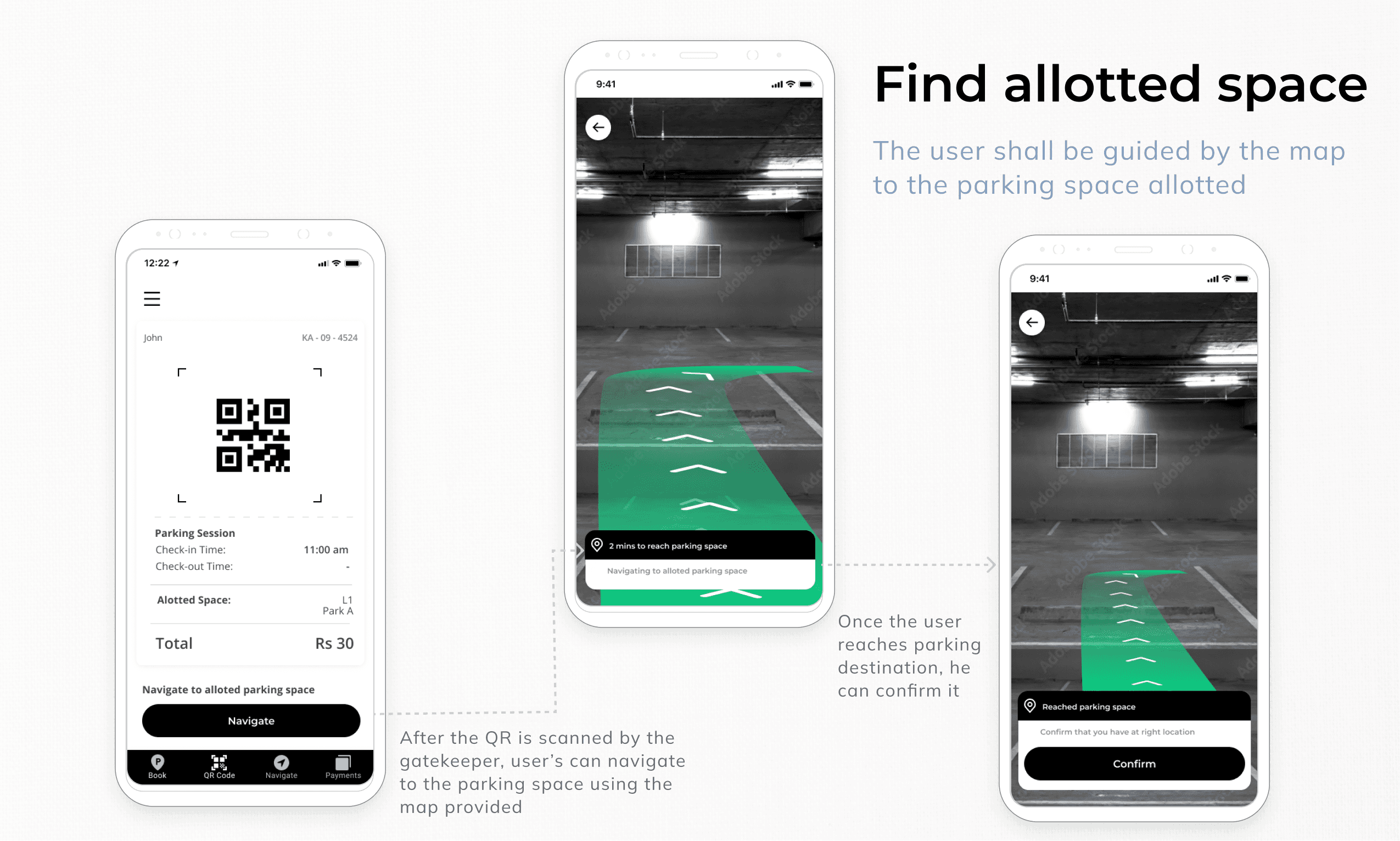
Users are guided through indoor navigation
Visual cues help them reach the exact allotted space
While exiting
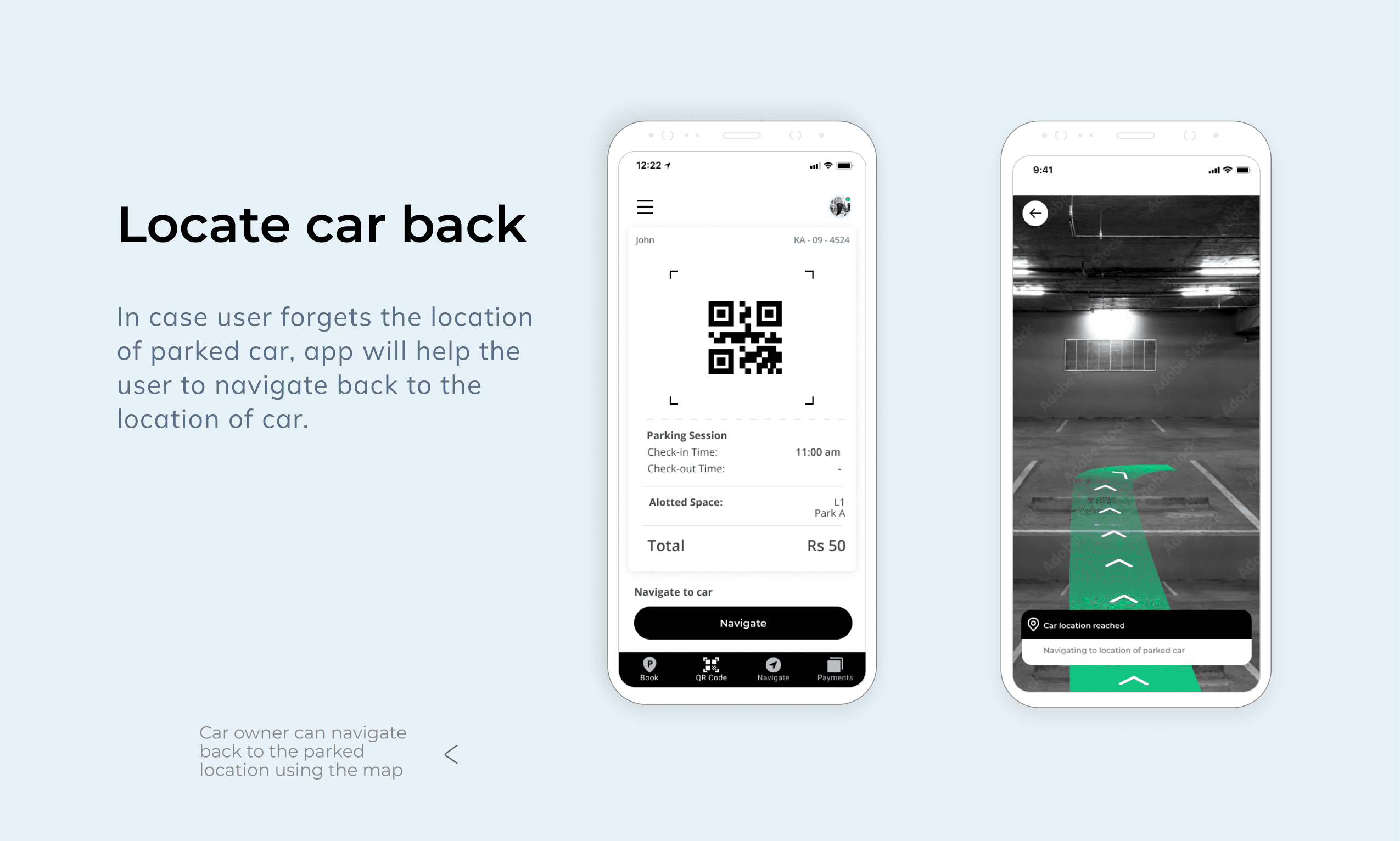
QR is scanned again
Billing is generated and paid
Exit becomes seamless and trackable
At every step, the system connects user actions with management visibility.
Balancing two users: Drivers & Management
A key part of the design was solving for both sides:
For drivers
Simple navigation
Clear directions
No dependency on network
For management
Ability to allot parking slots
Track entries and exits
Verify users through QR scans
Maintain system-level visibility
This ensured the solution wasn’t just usable—but operationally viable.
From frustration to flow
What was once:
Confusing
Time-consuming
Dependent on unreliable systems
Became:
Guided
Predictable
Seamless across entry, parking, and exit
The experience shifts from “Where do I go?”
to “I know exactly where I’m going.”