From breakdown stress to seamless service—anytime, anywhere.
Project
Automobile Service (UX case study)
Year
2021
Designing an end-to-end automobile service platform that simplifies booking, tracking, and managing vehicle services—especially during breakdown scenarios where reliability and speed are critical.
By combining service booking, real-time tracking, pickup & drop support, and transparent communication, the solution transforms a traditionally uncertain experience into one that is structured, predictable, and user-focused.
Scope of Work

01 THE SHORT VERSION
Designing an online platform that simplifies how people book, track, and manage their automobile services—especially during unexpected breakdowns where time, availability, and support become critical.
The solution focuses on creating a reliable, end-to-end experience that not only helps users book services easily but also ensures transparency through tracking, timely updates, and accessible support—bridging the gap between vehicle owners and service providers.
Solving for moments that matter most
Vehicle issues rarely happen at convenient times.
By the end of this project, users could:
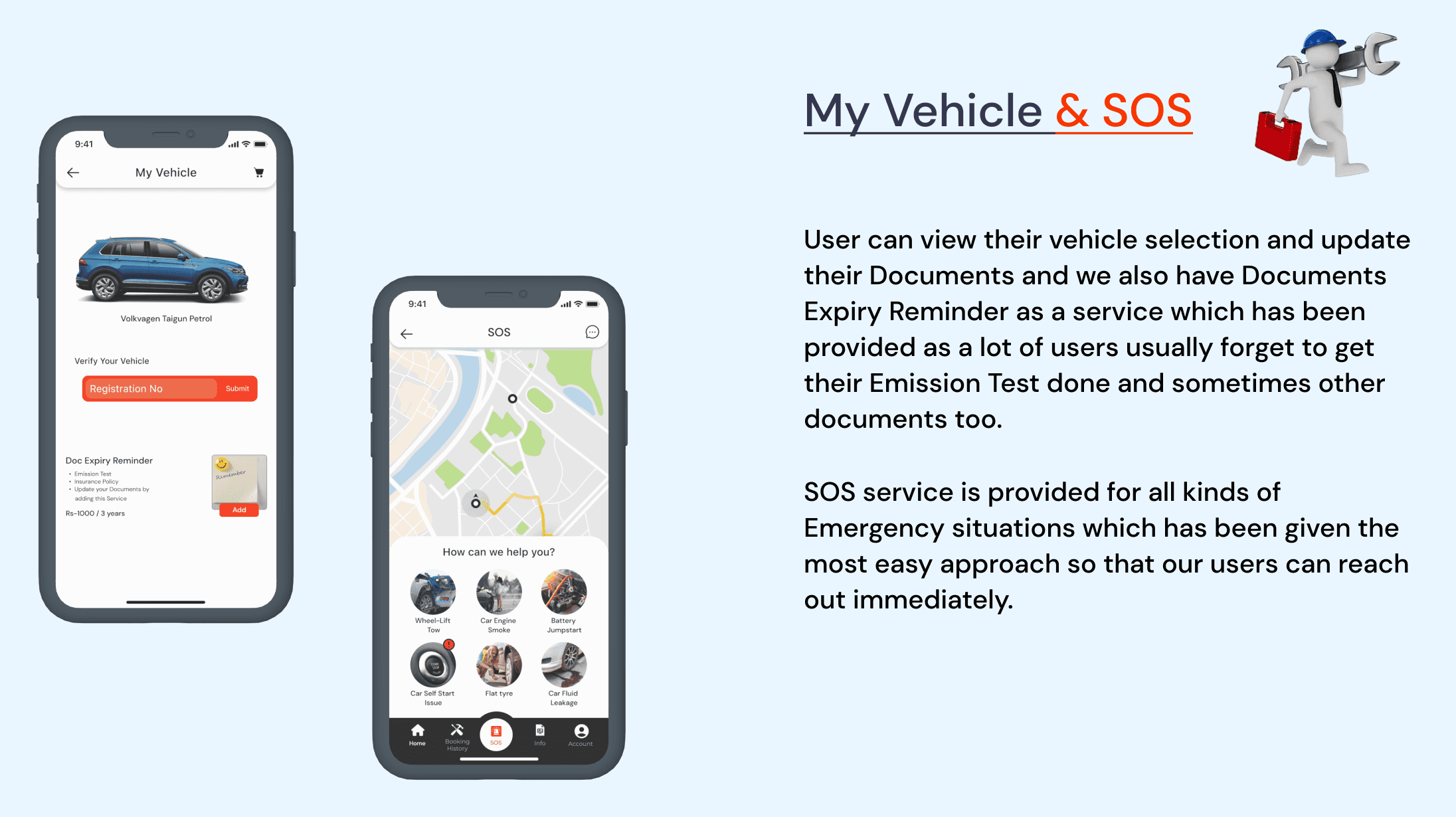
Book services instantly—even during breakdowns
Access pickup & drop facilities without hassle
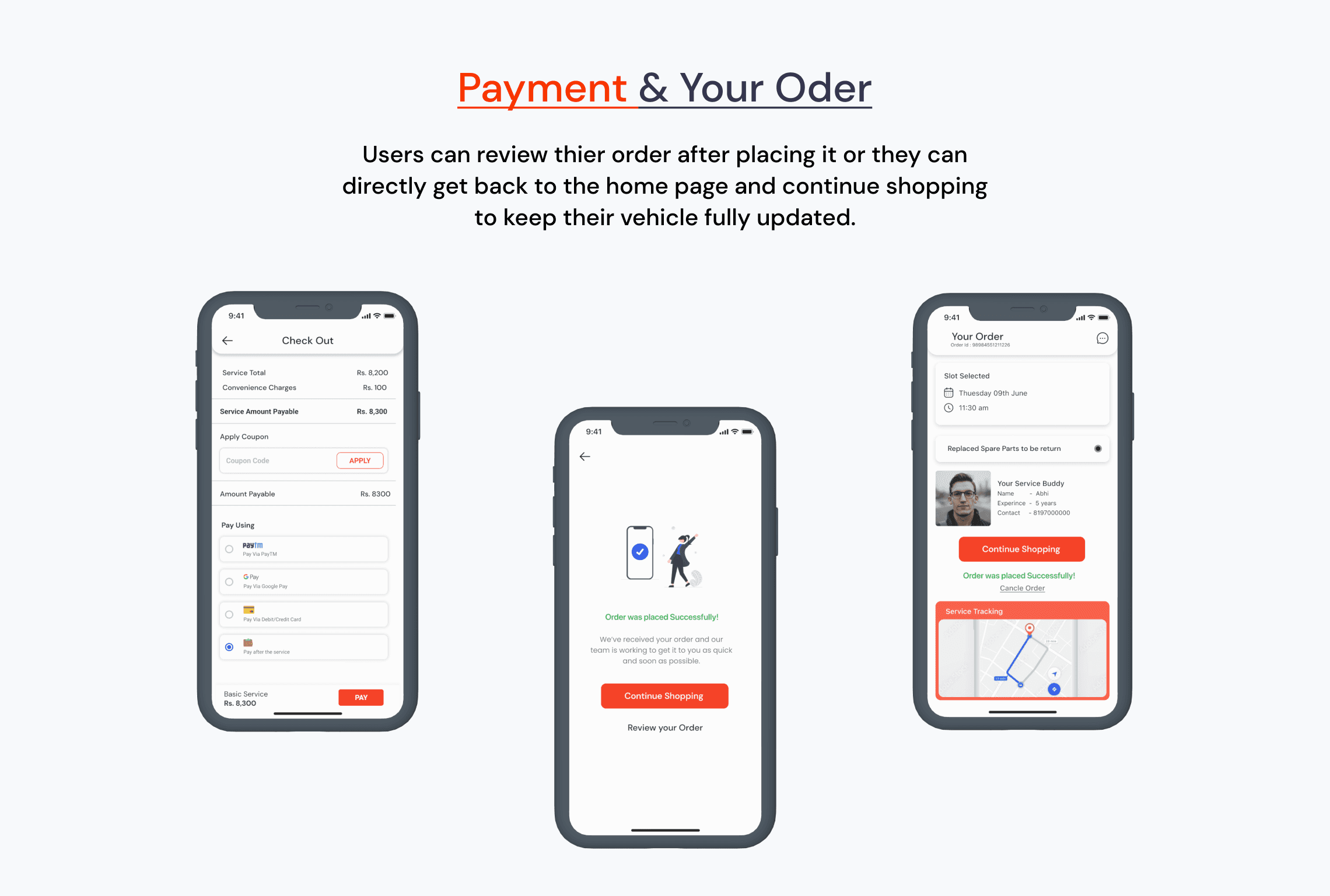
Track their vehicle service in real-time
Receive timely updates instead of waiting blindly
Get support when something goes wrong
Avoid delays caused by spare parts or poor coordination
What was once a stressful, uncertain experience became predictable and manageable.
What changed
The experience shifted from:
Uncertainty → Clarity
Long waiting times → Faster coordination
No updates → Real-time tracking
Offline dependency → Digital convenience
Users moved from “What’s happening with my vehicle?”
to “I know exactly what’s going on.”
Why this needed to exist
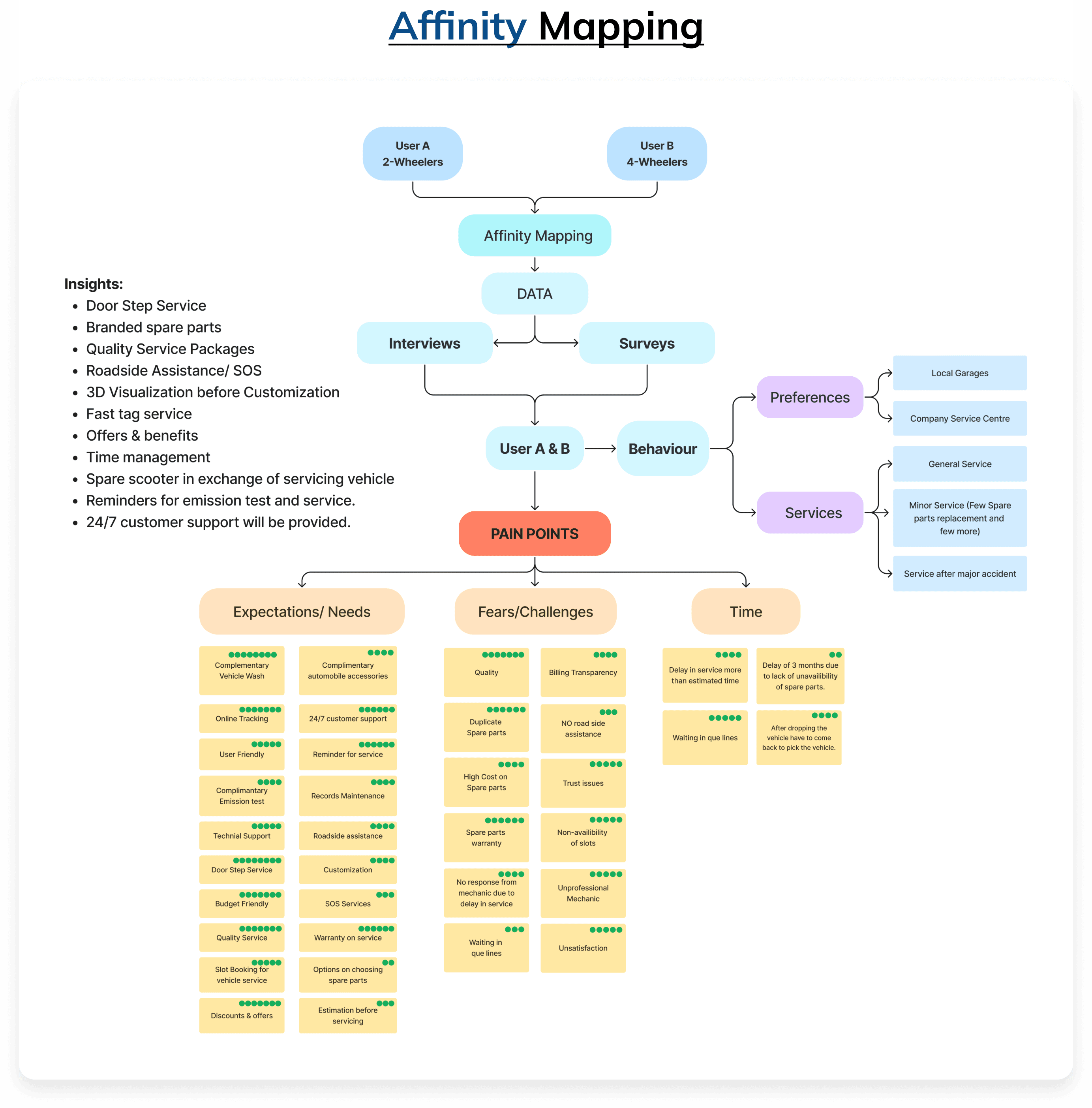
From research and user conversations, a few consistent pain points emerged:
Difficulty finding mechanics during sudden breakdowns
Long waiting times with no visibility or updates
Lack of customer support and accountability
No access to pickup & drop services
Delays due to spare parts unavailability
Poor time management across service workflows
There was a clear gap between service availability and user expectations.
Research-driven approach
Over 14 weeks, the project was built on strong research foundations:
User Research
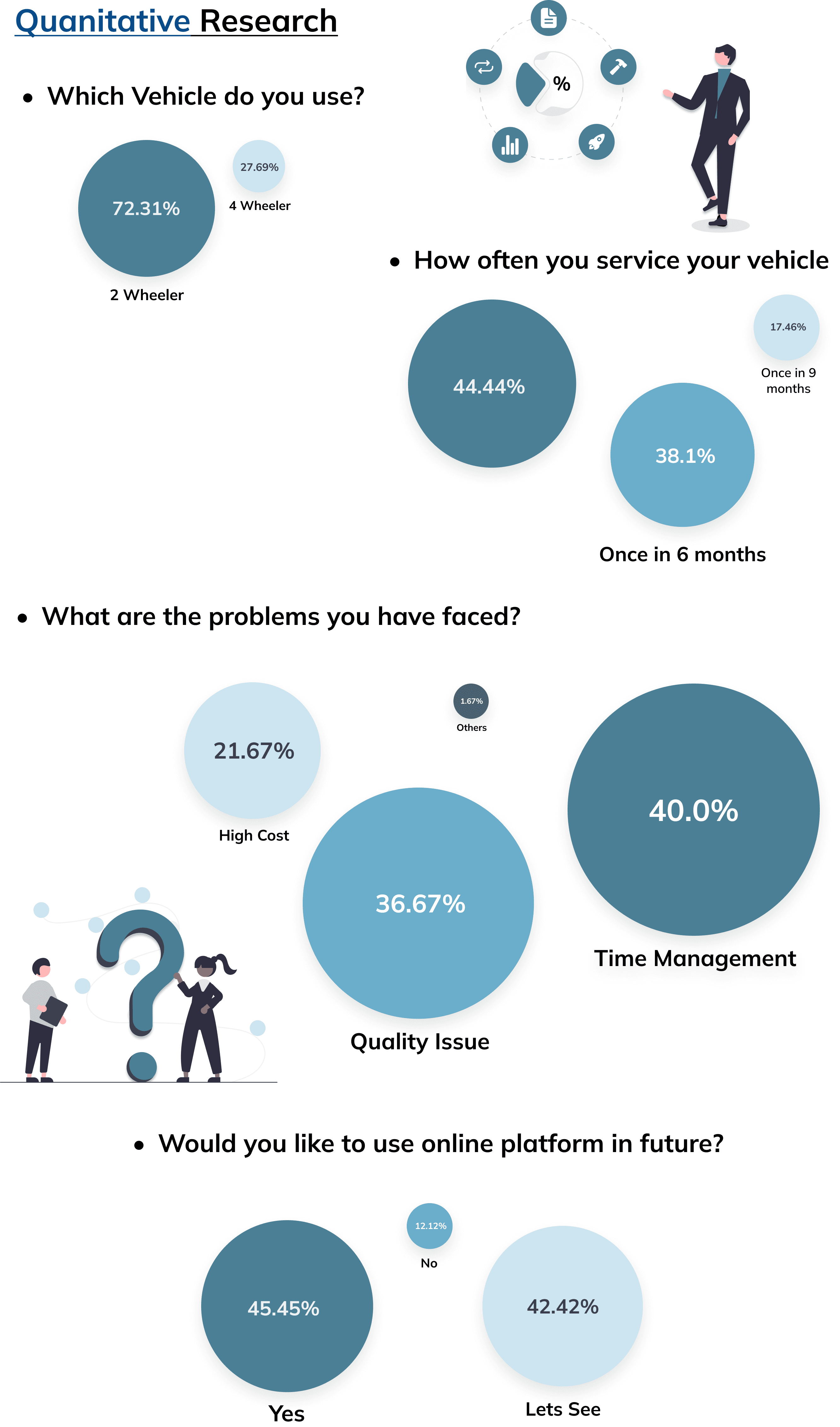
Conducted 15 in-depth user interviews
Focused on real experiences, frustrations, and expectations
Explored both existing platform usage and offline behaviors
Key questions explored
Service frequency and habits
Experience with online booking platforms
Breakdown scenarios and response challenges
Preference for doorstep services
Transparency and communication gaps
Key insight
Users don’t just want a way to book services—they want:
Reliability, visibility, and control during uncertain situations.
Designing the solution
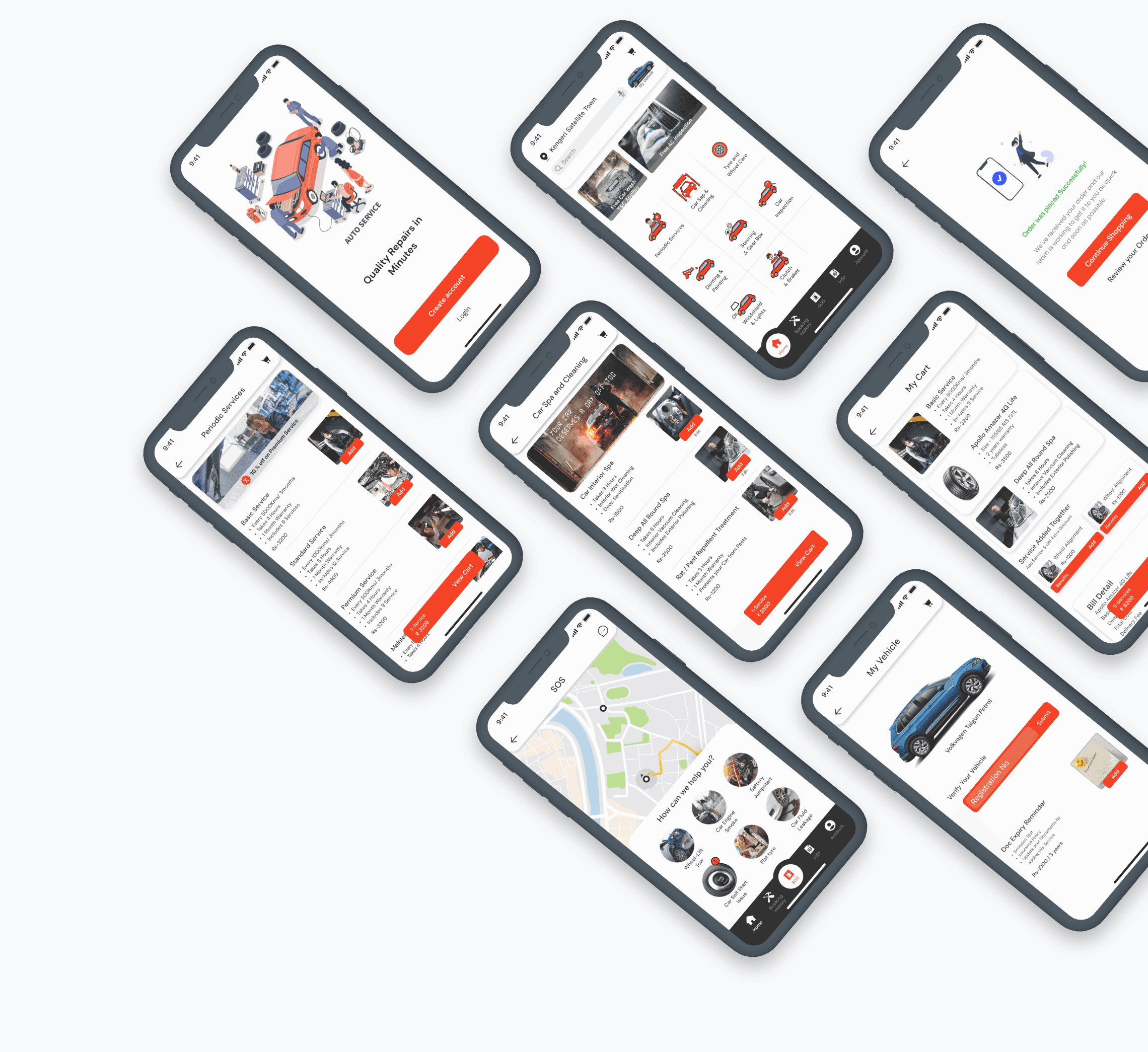
The platform was designed as a complete service ecosystem, not just a booking tool.
Core experience
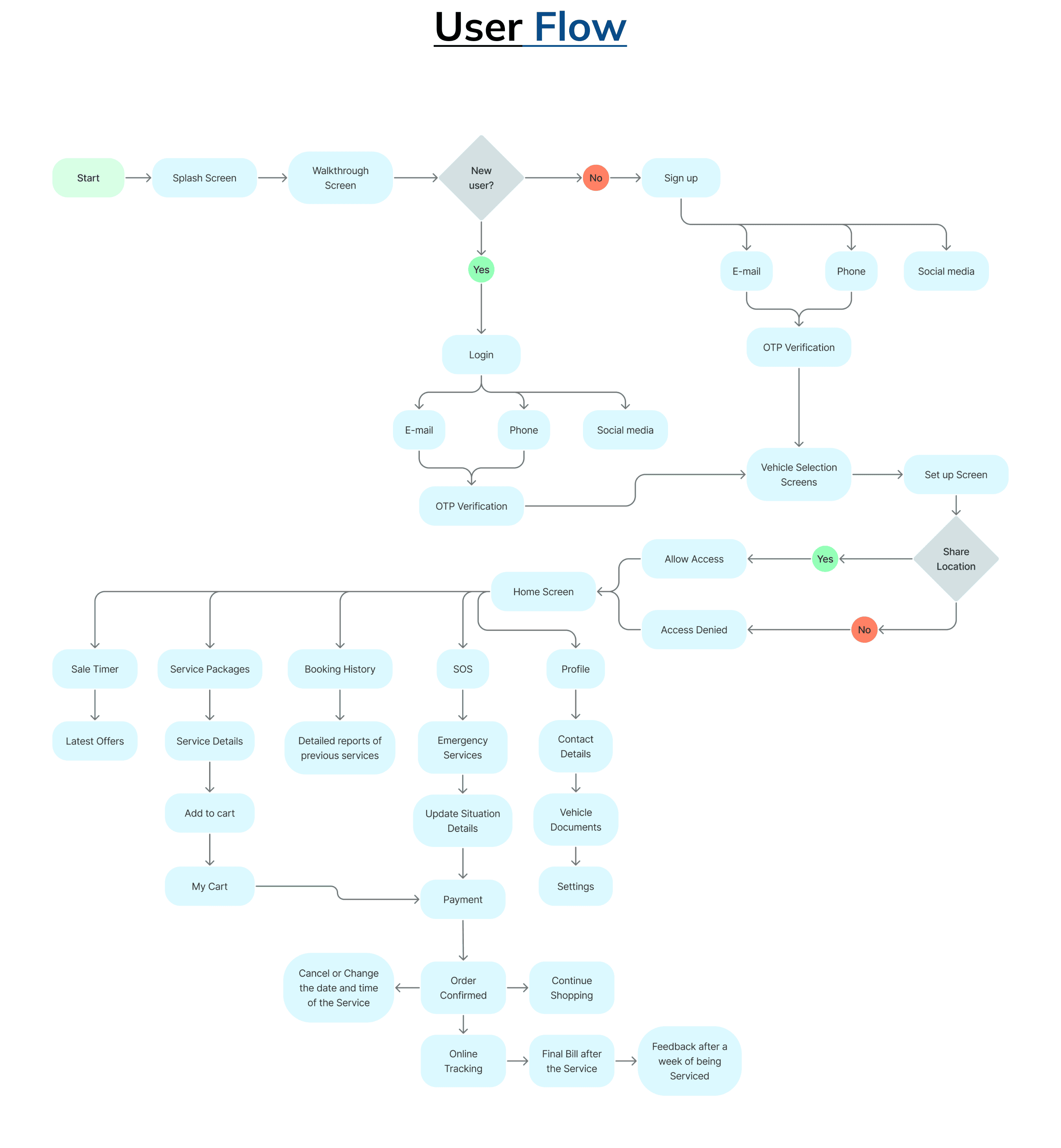
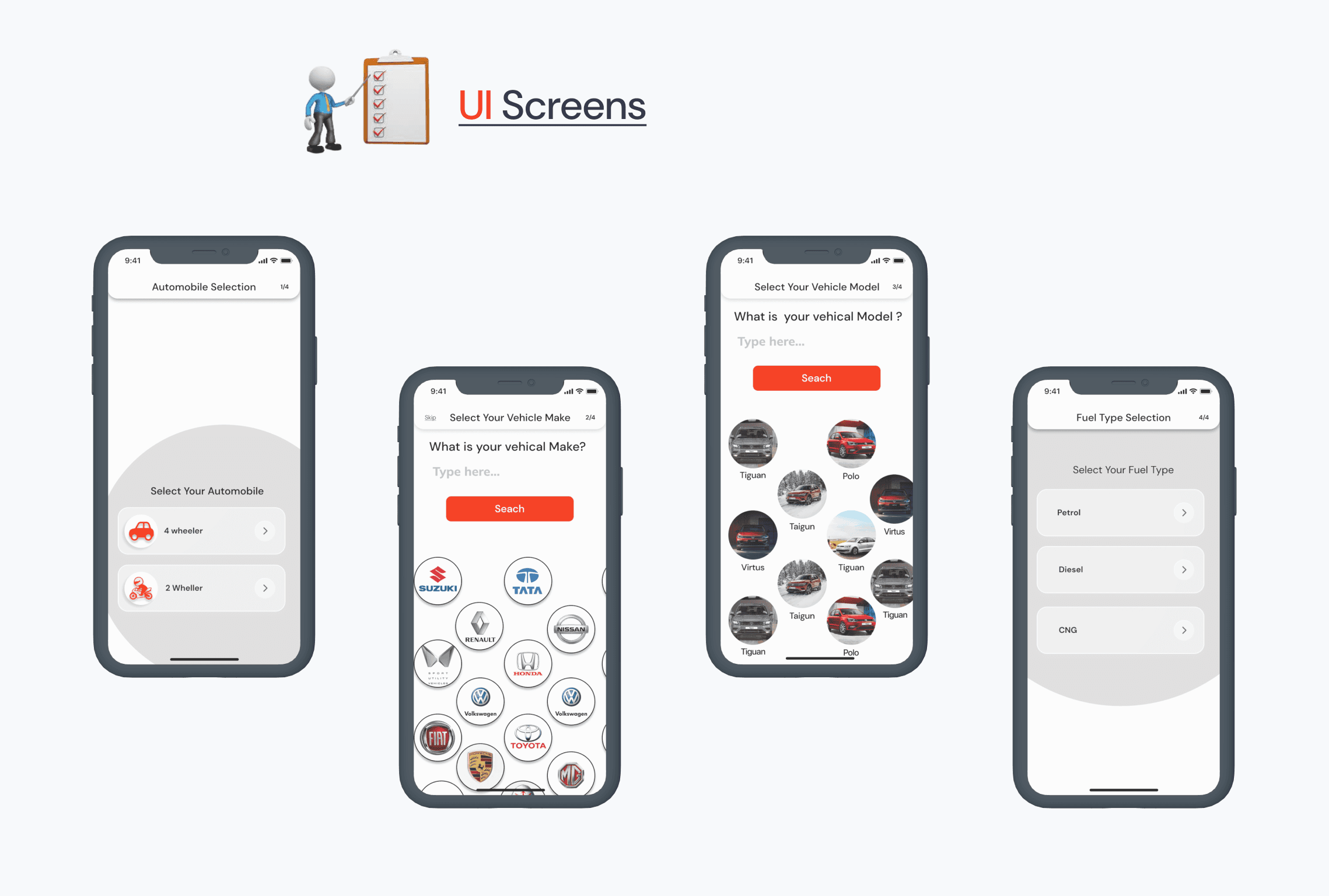
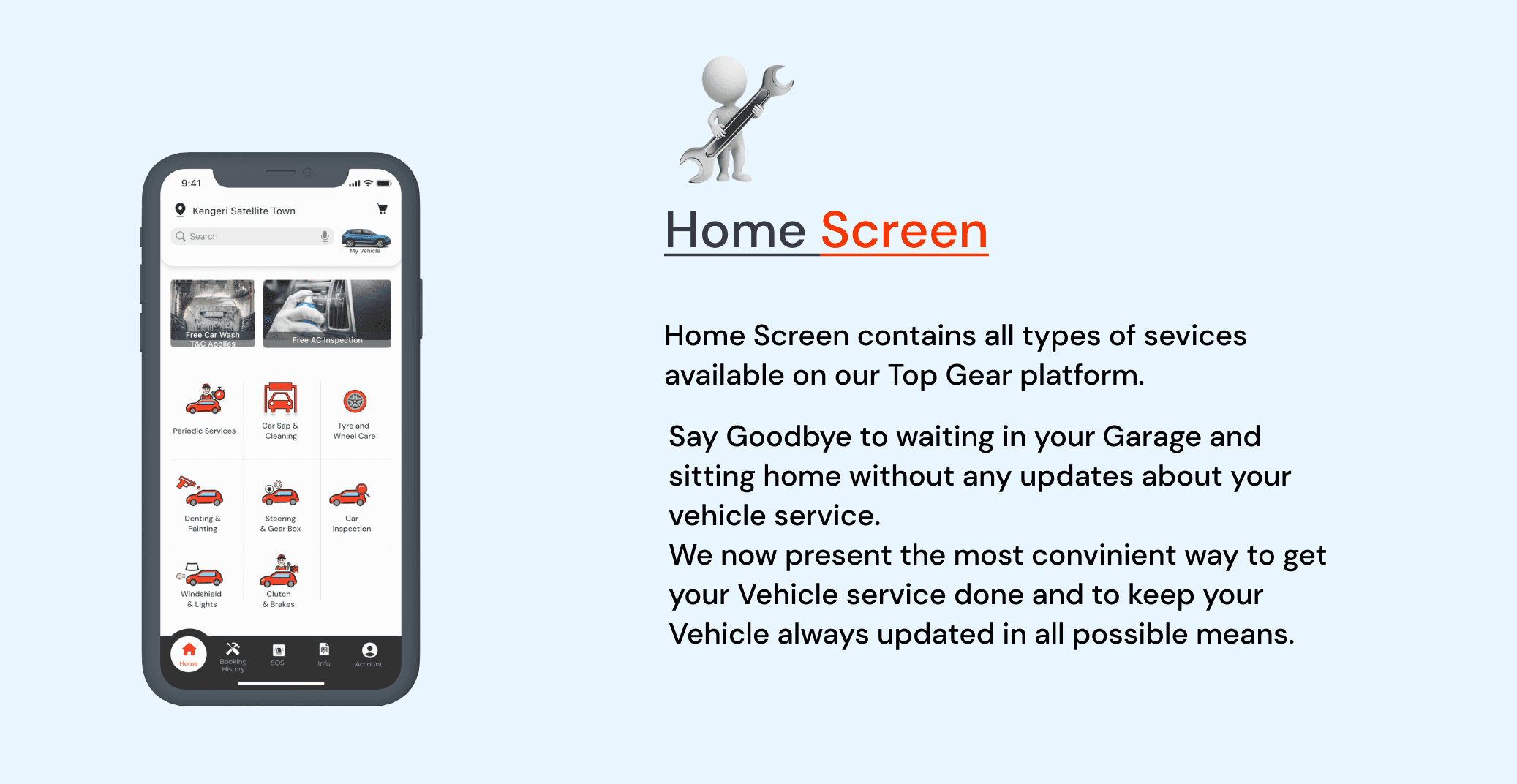
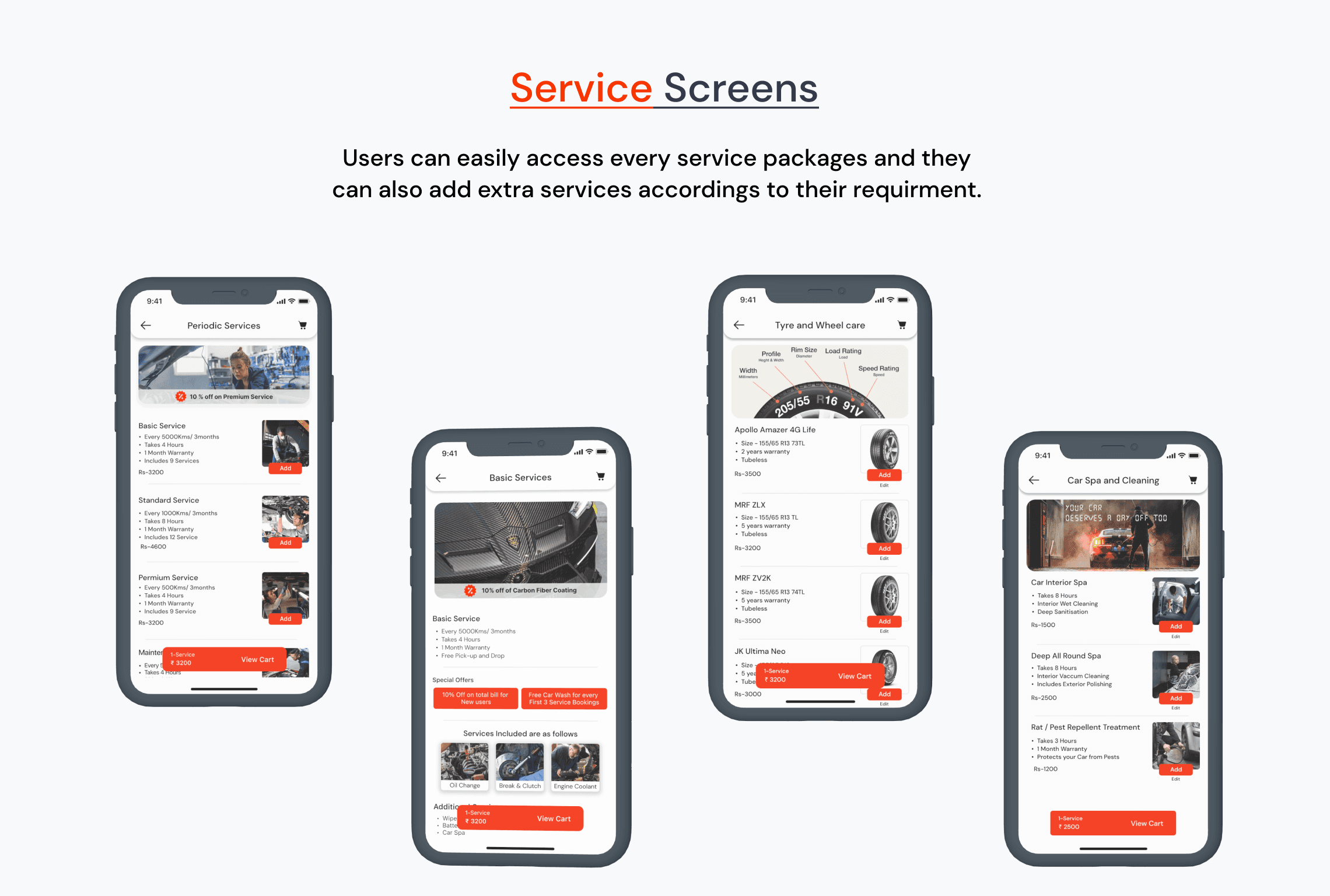
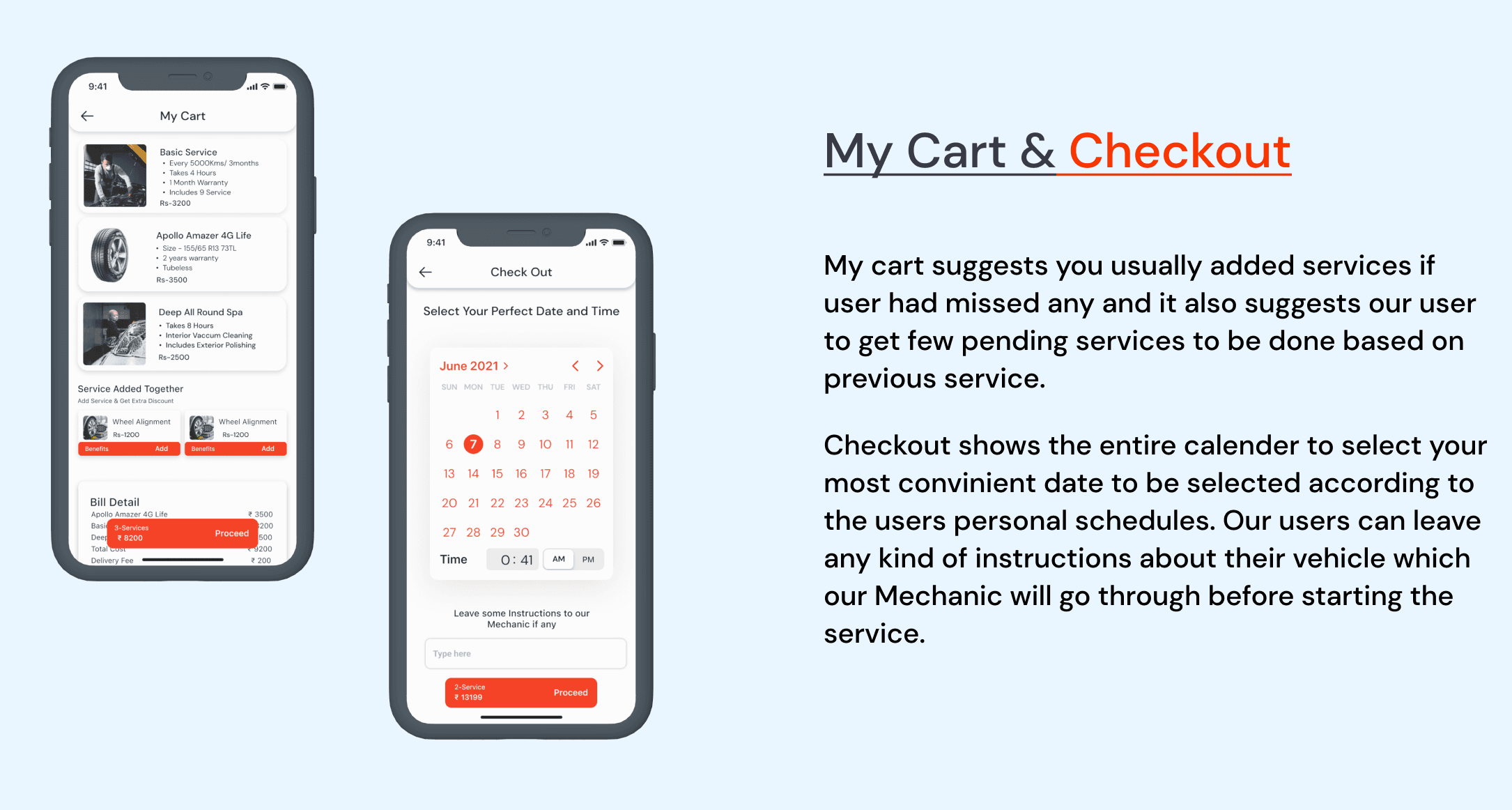
Easy service booking flow
Breakdown assistance support
Pickup & drop scheduling
Real-time service tracking
Notifications and updates
Customer support integration
Structuring the experience
To ensure usability and clarity, the process included:
Affinity Mapping to identify patterns
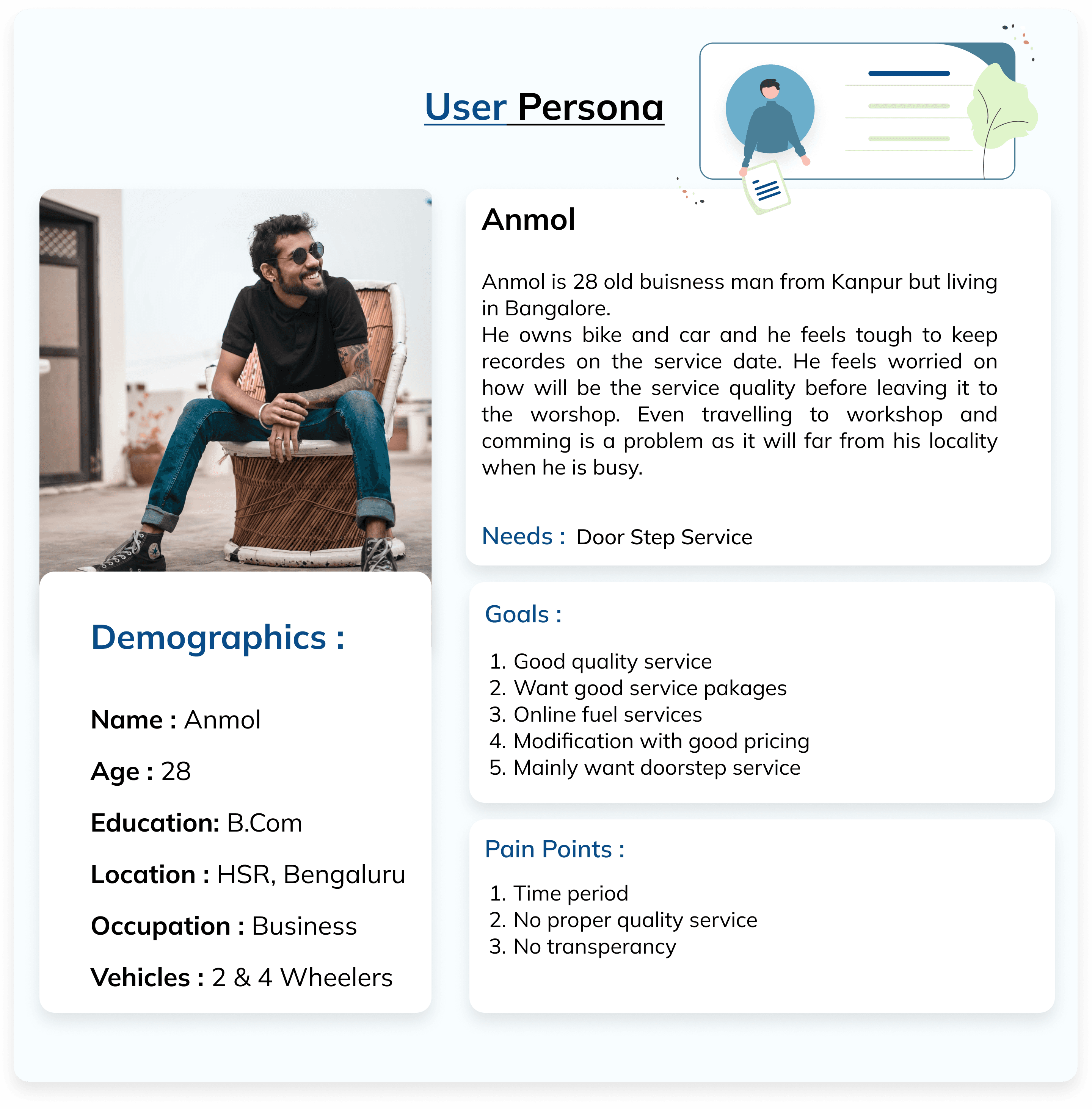
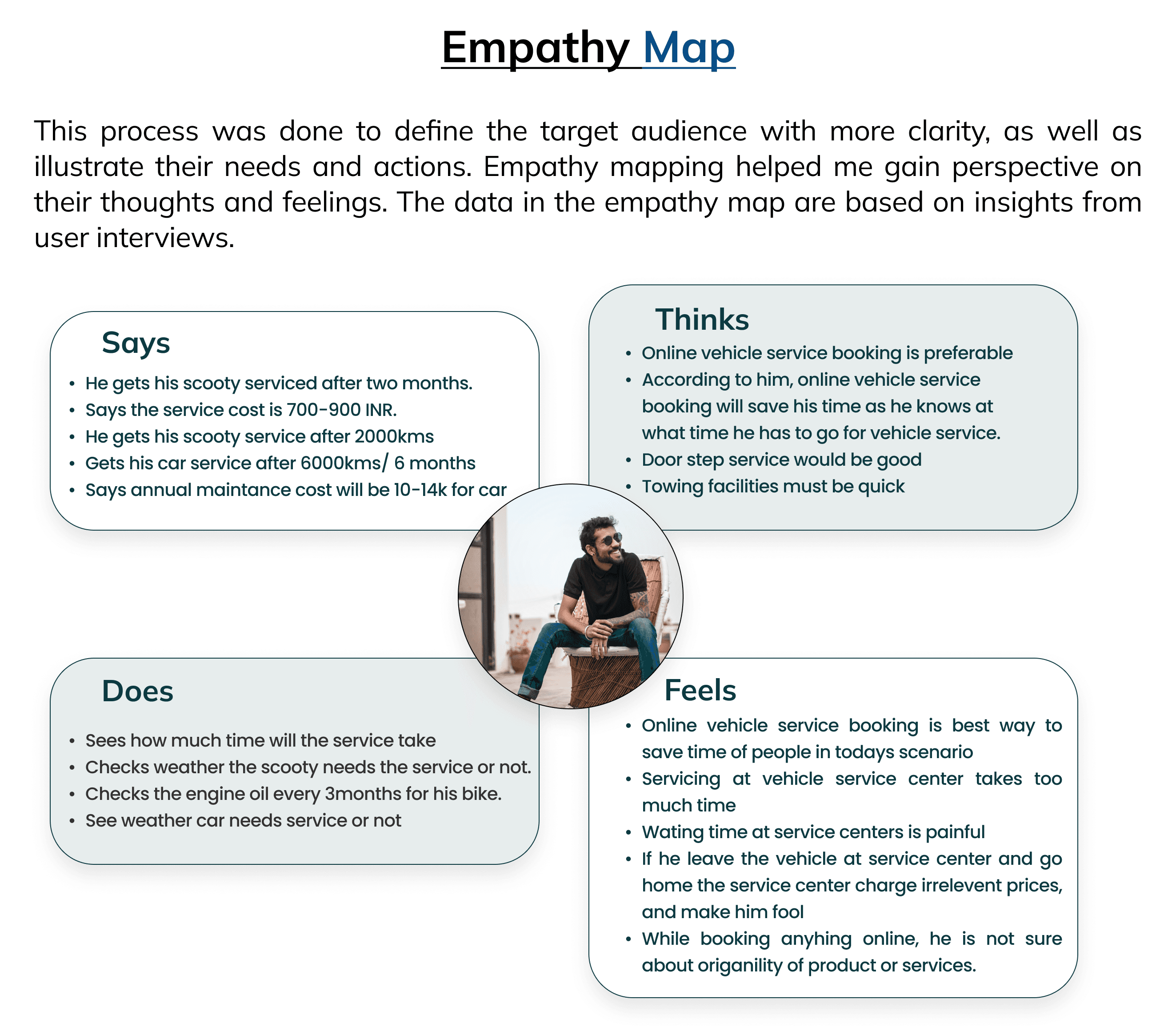
Persona & Empathy Mapping to understand users deeply
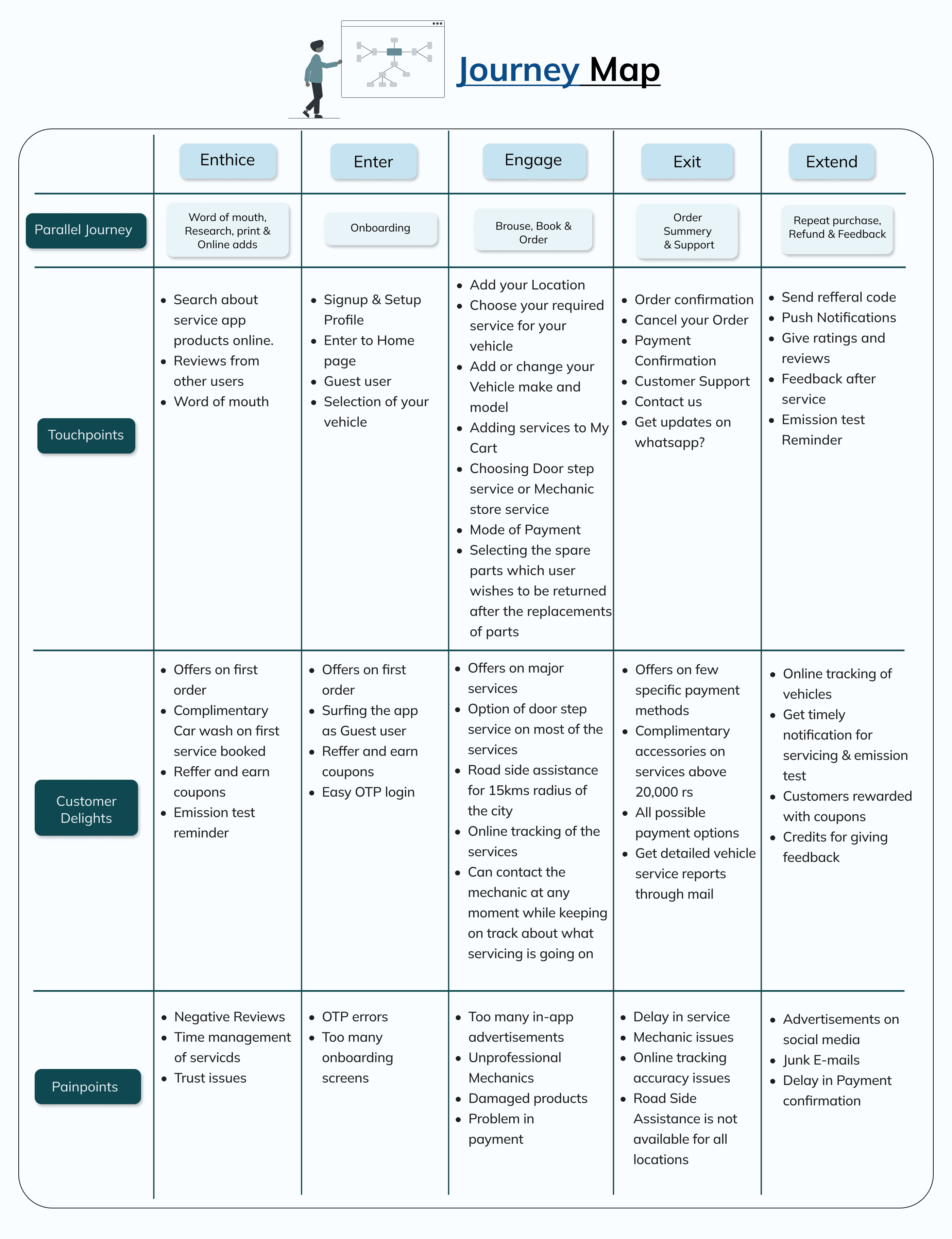
User Journey Mapping to uncover friction points
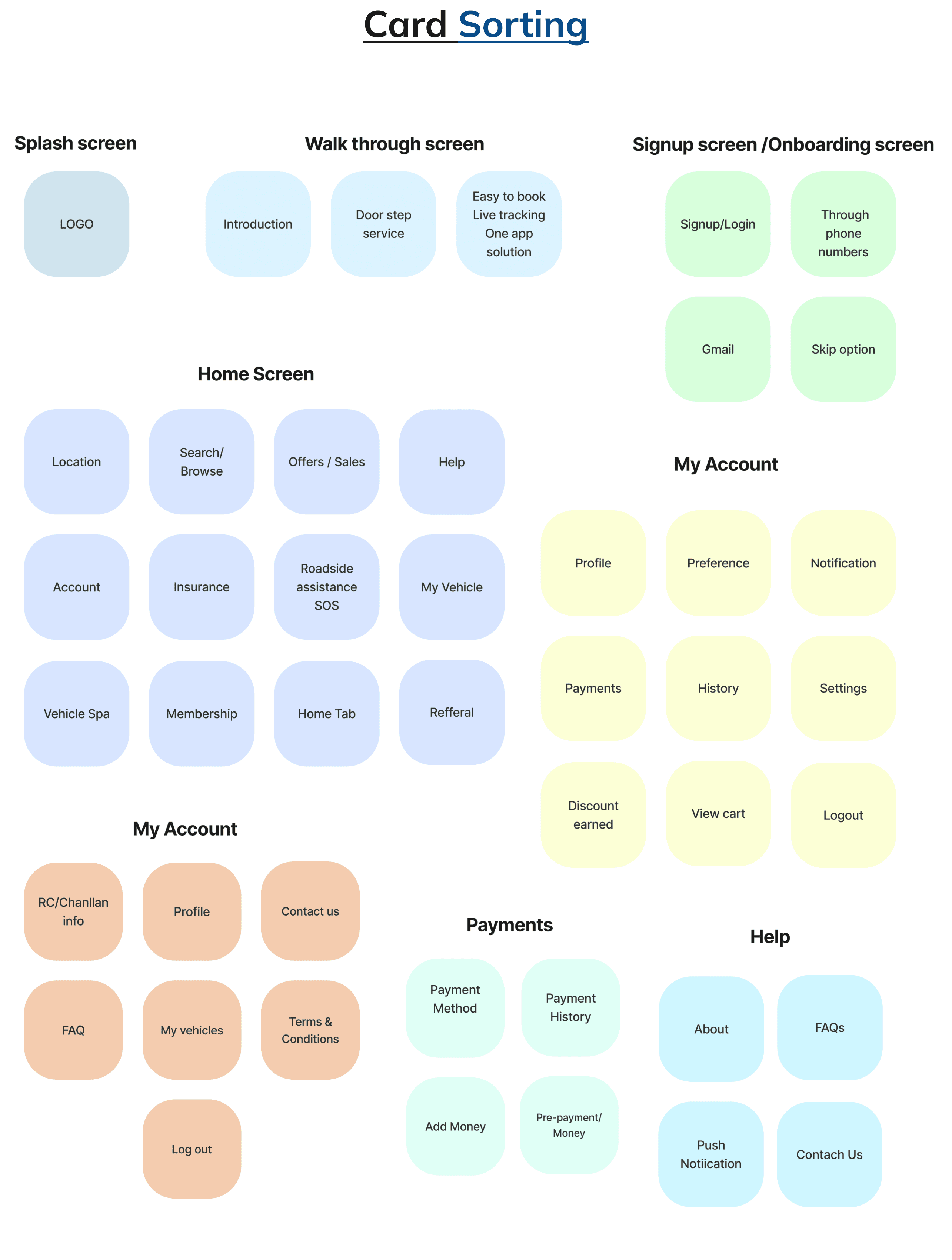
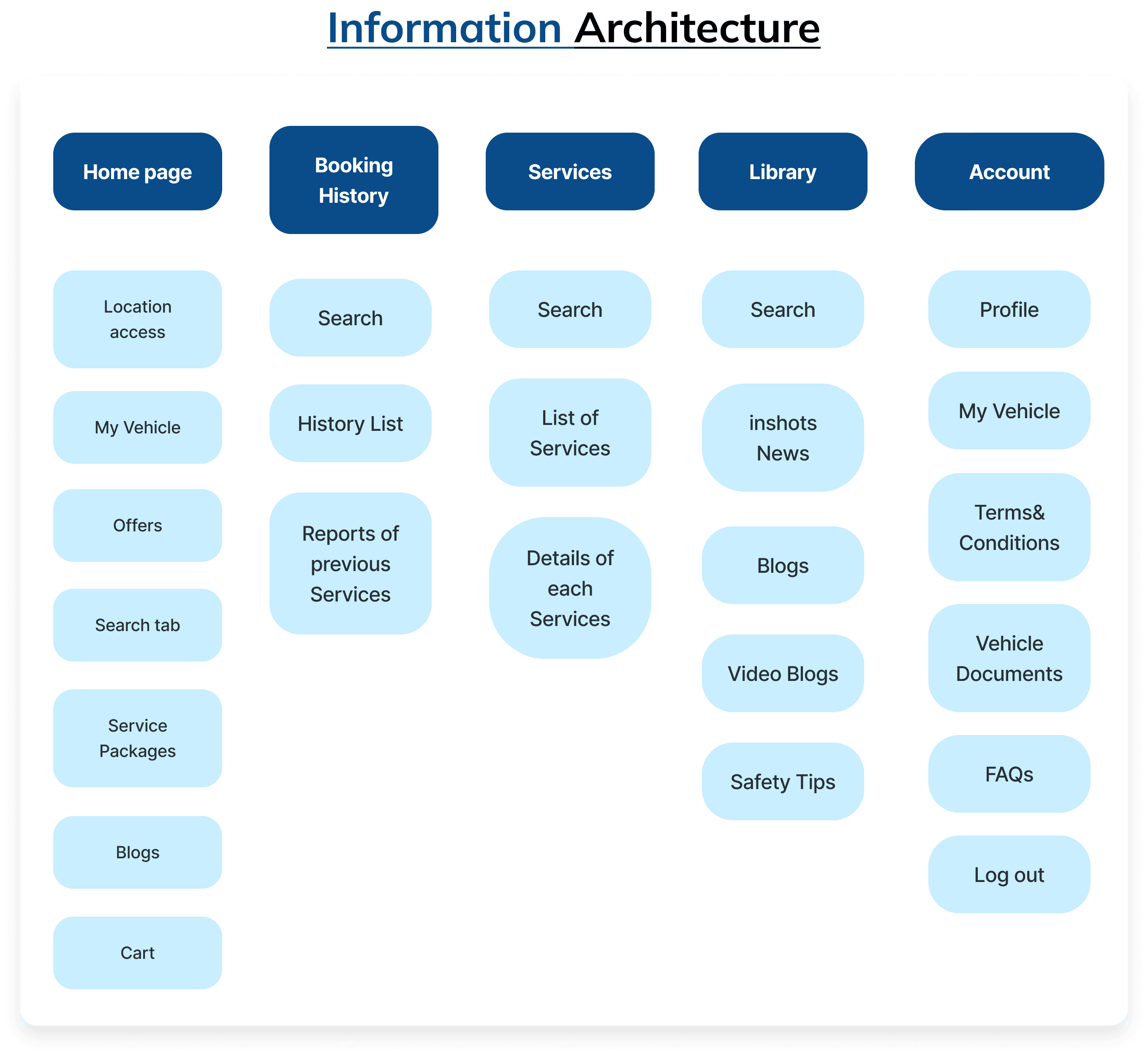
Card Sorting & Information Architecture for structure
User Flows to simplify navigation
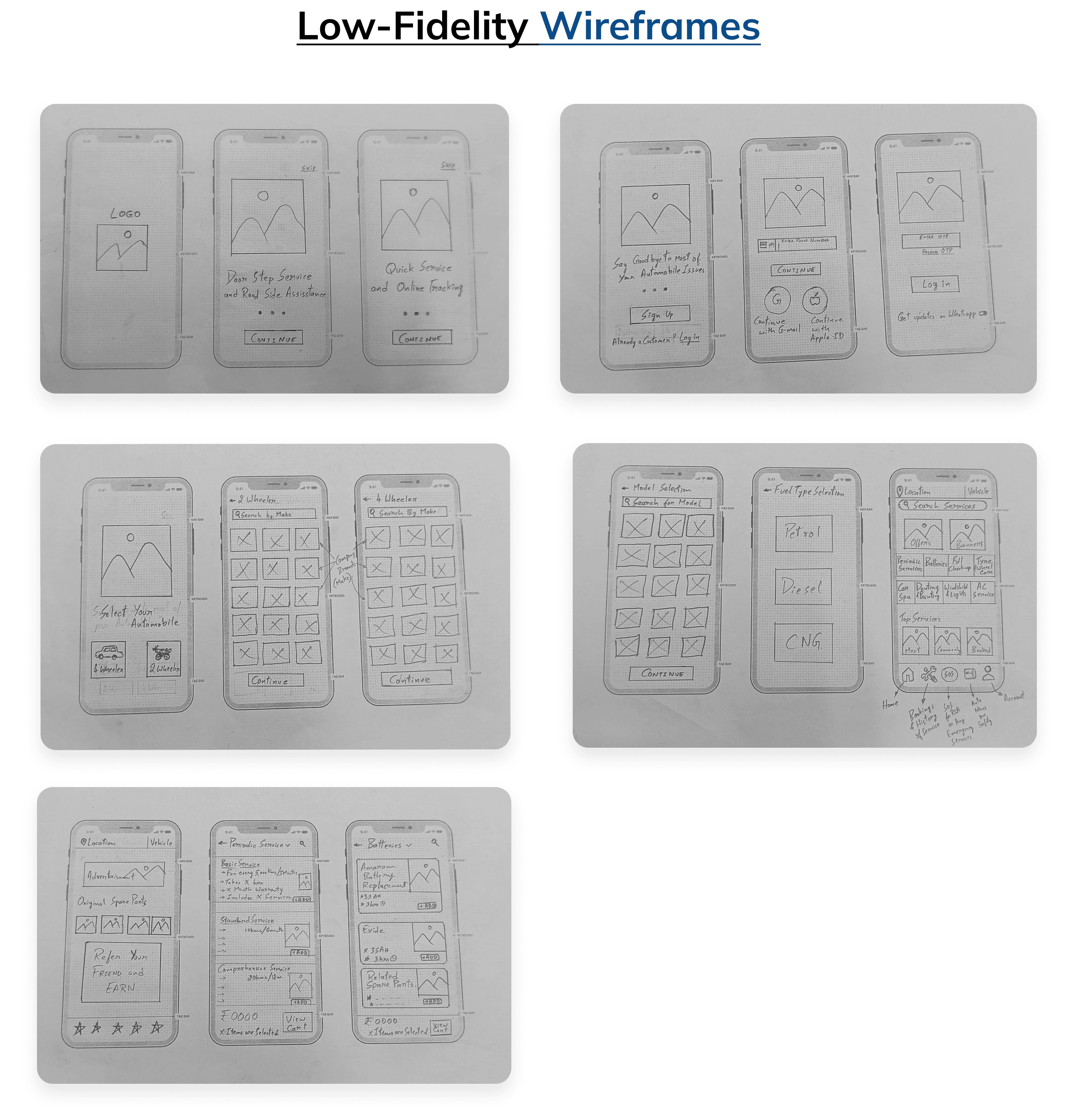
Wireframing → Visual Design → Usability Testing
What I worked on
User Research & Interviews
Design Strategy & Problem Framing
Competitive Analysis
Information Architecture
End-to-end UX & UI Design
Usability Testing
Delivered across 20+ screens, covering the full user journey.
Beyond just booking
This wasn’t just about scheduling a service.
It was about designing for:
Emergency situations (breakdowns)
Trust and transparency
Time-sensitive decisions
Real-world constraints (availability, parts, delays)
From chaos to control
What started as:
Stressful
Unpredictable
Poorly managed
Became:
Structured
Trackable
User-controlled
The experience shifts from “I hope this gets fixed soon”
to “I know exactly what’s happening and when.”