Introduction
There’s a certain clarity I find in the mountains that’s hard to replicate anywhere else. What began as an occasional break from routine gradually became a space where I could think more clearly, observe more deeply, and understand myself better. Trekking, for me, is not just a physical journey—it’s an exercise in presence, patience, and perspective.
Kedarkantha — A Defining Experience
Kedarkantha was not planned with high expectations. It was, in many ways, just another trek I decided to take. But the experience turned out to be far more significant than I had anticipated.
Like most unfamiliar challenges, it began with hesitation. There was a constant internal dialogue—questioning my readiness, my endurance, and whether I would be able to keep up. But as the trek progressed, that uncertainty slowly gave way to a quiet sense of confidence.
The mountains have a way of simplifying things. The focus shifts from overthinking to simply taking the next step.
What stood out most during this journey was not just the terrain, but the shift in mindset. At one point, I found myself stepping into a leadership role for the group, even if briefly and under guidance. It was unexpected, but it revealed how quickly we can adapt when we allow ourselves to be present in the moment.
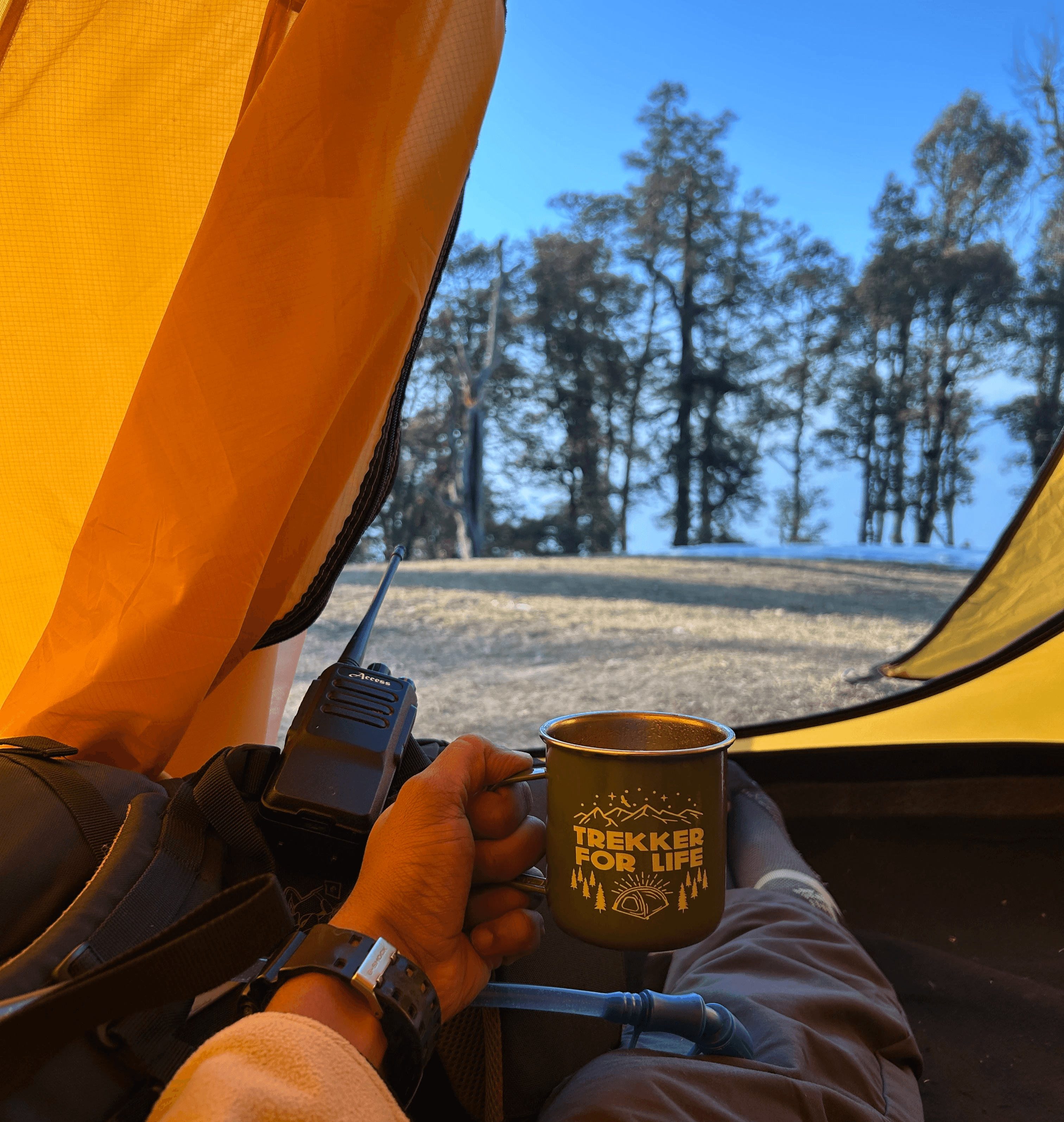
Another aspect that stayed with me was the intentional disconnection. With my phone on flight mode, there were no distractions—only conversations, observations, and time to reflect. It created a sense of awareness that is often missing in everyday life.
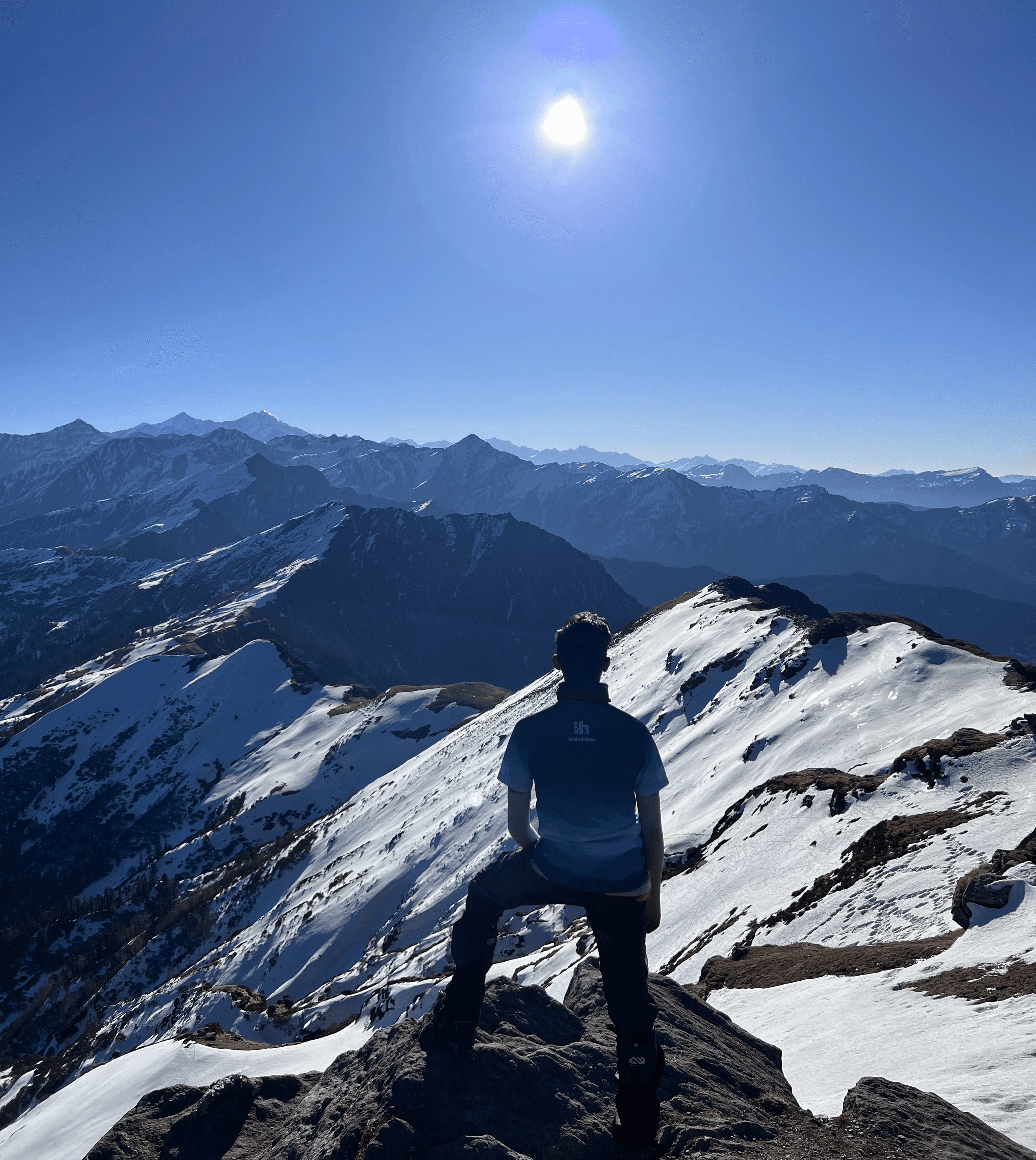
Reaching the summit at 12,500 feet was undoubtedly rewarding, but what made it meaningful was everything that led up to it—the uncertainty at the start, the gradual progress, and the collective effort of the group. The summit was not just a destination; it was a culmination of the journey.
Beyond One Trek
While Kedarkantha stands out as a defining experience, it is part of a much larger journey. Over time, I’ve explored a range of terrains and trails—each offering a different kind of challenge and learning.
From the dense forests of Kodachadri and Kudremukh, to the demanding climb of Kumara Parvatha, to experiences beyond Karnataka like the Peb trek (Matheran region) and the Laka Glacier trail leading towards Indrahar Pass via Triund—each trek has added a new layer to how I understand both the outdoors and myself.
Closer to home, shorter hikes like Ethina Bhuja, Pandava Betta, and Kunti Betta (Mandya) have been equally meaningful in their own way—reminding me that it’s not always about the scale of the mountain, but the intent to step out and explore.
These journeys, along with many more hikes, have gradually shaped how I approach challenges—staying patient through uncertainty, adapting to changing conditions, and focusing on the process rather than just the outcome.
Over time, this mindset has extended into my work as a designer as well. Trekking has taught me to observe more carefully, embrace ambiguity, and understand that meaningful experiences—whether in the mountains or in design—are built step by step.
The mountains may differ, and the routes may change, but the intent remains the same. If there’s an opportunity to be out there, I know I’ll take it.